Cinema is an art form that's over 100 years old. Hundreds of thousands of films have been produced of all shapes and sizes and of all genres all over the world. As lovers of cinema, we are often confused and dumbfounded as to which films to watch. As an answer, Stephen Jay Schneider and a group of film critics and theorists around the world put together this compilation of 1,001 culturally, technologically, artistically and historically significant films.
Arranged in chronological order and covering over 100 years worth of history in film, from the early 1902 Georges Milies science-fiction film "A Voyage to the Moon" to last year's Oscar Best Picture winner "Million Dollar Baby", the book covers a very wide range of forms and genres of film: From huge Hollywood epic spectacles like "Gone with the Wind" and "Spartacus" to gritty independent pictures like John Cassavetes's "Faces" and Samuel Fuller's "Shock Corridor"; from famous mainstream blockbuster features like "Titanic" and "Jurassic Park" to obscure, daring short films like "Blonde Cobra" and Luis Bunuel's "Un Chien Andalou"; from kid-friendly "Snow White and the Seven Dwarfs" and Disney's "Beauty and the Beast" to disturbing, daring films like "Salo" and "In the Realm of the Senses". Significant effort was made by the editors and the contributing writers to represent nearly every genre of film out there. In addition to featuring the well-known, highly regarded classics of horror, drama, comedy, science fiction, fantasy, etc. sub-genres as varied as Chinese kung fu movies ("Shaolin Master Killer"), blaxploitation ("Sweet Sweetbacks Baaadaassssssss Song") and mockumentaries ("This Is Spinal Tap") are also represented. Also impressive in this book is that it took the effort to feature significant films from all over the world even in countries which are not primarily known for their film industry like Senegal, Egypt and Jamaica. All in an apparent effort to cover as wide a range of the art of film as possible.
All the great directors, both of the past and of contemporary times, have several of their films on this book: John Ford, Steven Spielberg, Billy Wilder, Akira Kurosawa, Yasujiro Ozu, Luis Bunuel, Jean-Luc Godard, Pedro Almodovar, Martin Scorsese, Robert Altman etc. among others. Alfred Hitchcock has the distinction of having the most films with 15 from his oeuvre profiled. Each film is given an essay written by the various contributors detailing the film's significance, it's history and various interesting tidbits of trivia as well as a critique of the film in an intelligent non-pretentious or overly scholarly manner. Though the book is by no means perfect, the questionable inclusion of "Meet the Parents" is one of the more glaring of its flaws and arguments can be made for the inclusion and exclusion of several other movies, this book probably comes the closest to being the most definitive list available that's accessible even to the average film goer. Quite a number of films featured in this book are not currently available on video or DVD. Perhaps their inclusion in this book would help them get released on DVD and thus finding a wider audience.
Whether you are a budding teenage film buff or a veteran film scholar, there is plenty to love about this book which gives a straight-forward, non-snobbish take on film history that would make the art of watching movies truly enjoyable. This is the book all lovers of film should have on their bookshelves.
Wednesday, March 16, 2011
<i>1,001 Movies You Must See Before You Die</i> a Must-Read for Film Buffs

Upgrade Your Digital Photography Studio on a Budget
Digital photography is progressing almost as fast as the computer industry. Mega-pixels are multiplying faster than you can count them. As with all advances in technology, a higher price tag is attached. So, how do you upgrade your digital photography studio with out breaking your budget?
Let's go over a few ways to do just that.
Upgrade your Digital Photography Studio - Don't Buy New
The more mega pixels the better, I know. But, if you are using a 5.0 mega pixel camera now, wouldn't a 6.0 one be an upgrade? There is no need to spend the extra $3000 to get the newest 10 mega pixel digital camera.
There are plenty of used camera stores to find newer equipment that will fit your budget as well. KEH offers a huge selection of both new and used digital camera equipment, all of which has been cleaned and tested.
Let's not forget about eBay either. The deals there on new equipment are sometimes better then buying older used equipment. You never know when some college kid is going to sell off his $3000 digital camera just so he can make rent.
Upgrade your Digital Photography Studio - Compensatory Upgrades
Find way to stream line your business. Odds are, you don't have a lot of people working at your digital photography studio. So, you probably wont be buying equipment that saves you money by eliminating workers. Still, there is always new software coming out to help you stream line your business.
Such software may be expensive at first, but will be worth the price. Even if the software does nothing more than free up two hours in your work day, that is two more hours to make money. That is two more hours to see customers. Those customers could then turn into lifetime customers who bring your repeat business and great word of mouth advertising. All because you freed up two hours in your work day.
Upgrade your Digital Photography Studio - Upgrade Only What You Need
Upgrading your digital photography studio doesn't mean you have to spend a fortune on new gear, lights, printers, computers, and what have you. Take some time to really identify what it is in your digital photography studio that needs to be upgraded.
Lets say you bought an expensive sub dye printer years ago to start printing photographs in house. 60,000 prints later, it's just not what it used to be. This doesn't mean you have fork over a huge amount of money to buy a new one. You could out source your printing for a while or you could even look into getting the printer refurbished by the manufacturer.
Upgrade your Digital Photography Studio - Upgrade Your Staff
Not every digital photography studio upgrade is a piece of expensive new gear. Invest some of your budget by training your staff. If you have other photographers working for you, try spending some money on a training workshop. The more your employees know about their job, the better they are at it. These workshops will help increase your staffs skills, but it will also help them get a better picture of what you want. Being on the same wavelength with your employees will also help them operate more efficiently
If you have complicated software programs, consider having a sales rep come out and teach your staff about the software. This goes back the same point, the more your employees know, the better they operate. Often, sales reps will be more than happy to come out and teach refresher courses or how to use new programs free of charge. After all, the happier you are with their product, the more you will buy from them in the future.
These are just a few ways to upgrade your digital photography studio with out breaking your budget. There are always ways to pinch pennies if you think about. The biggest obstacle to get over is the, must have the new stuff, mentality. You almost never need the new stuff, it is almost certainly nothing more than a want. Think before you buy and you are sure to save money in the now and make more in the future.
Shooting for Stock Photography

source
A great way to earn money and learn a lot in the internet is participating in stock photography. Stock photography has been around for a while. And there are a lot of great stock sites that sell photographs for a reasonable price.
Just how and what should you shoot to be able to participate in stock photography?
Photographers say you should start with the concept. But the very first thing you should do is to know your equipment. I literally spent ten times more time trying to know how my camera works than thinking of something to shoot.
Stock photography is a very demanding industry. It's as close as you'll get to professional photography. It requires you to be able to produce images of the highest quality. That is because this industry is very competitive.
Try shooting the same subject with different settings. You should know how your camera reacts with different kinds of light. You should also know how it responds to different levels of illumination. Note the differences you see and keep them in mind.
Next you need a concept. Your images should present an idea, a thought or an expression. Consider a photograph of a man typing on a computer. What is he doing? Why is he typing? Is he working? Is he Blogging? Or just playing?
Designers buy stock images because of the concept they present - not because they look good. Stock photos are used in web sites, brochures, magazines, publications, advertisements, and almost anything that has a print.
So you need to have an image that has a concept that satisfies the needs of the would-be buyers of your pictures.
Then, you need a lot of light. Stock photos require that images have the right level of illumination and contrast. They need to be clear. If you can't afford a big set-up, you can always use desk lamps or even the sun.
You'll also need a computer and two kinds of programs: noise reduction tool and a photo editing application. Most stock photographs go through a noise reduction process. They also get a little tweaking in color, contrast and brightness.
Stock photographs need to be as close to perfect as possible. It's like what they say in the computer graphics industry: "it does not matter how you do it as long as you get the job done." Don't think that editing a photo in your pc is cheating. That only goes for journalism.
The next is pretty simple. You need a stock agency to upload your images to. Or you can showcase your work in your own site. Uploading in stock agencies is better. That is because you can find out where and how to improve. Use their powerful community to find out your weakness and strengths as a photographer.
Then when you have all this, what you need to do next is to be consistent and improve and improve and improve. You need to keep up with the ever demanding industries. If you don't, you'll get left behind.
Friday, March 4, 2011
Baby Shower Gifts Under $10

baby clothes gifts
The pitter-patter of little feet is always a joyous sound to your ears, but all those baby shower gifts are draining your savings. You don't have to blow a bundle on adorable toys and outfits to create a memorable baby gift. The next time you get invited to a baby shower keep these great $10 or less gift ideas in mind:
1.)Babysitting Coupons: This gift will only cost a bit of your precious time. Print up cute certificates offering hour-long babysitting sessions. The mom-to-be will adore a baby-free afternoon and the chance for a pedicure or uninterrupted lunch.
2.)Movie Package: Buy a pre-owned DVD ($5 or less on Amazon or eBay) and package it with microwave popcorn - it could be awhile before the new parents can get back to a movie theater.
3.)Mix it Up: Burn a CD of your favorite, upbeat, baby-friendly tunes. The Beatles, ABBA and Simon and Garfunkel are always popular with kids. Your friends will thank you for saving them from suffering through an endless loop of Raffi.
4.) Subscription Prescription: Give the new parents a subscription to a parenting magazine like FamilyFun ($9.95 for ten issues), Parent & Child ($9.97 for six issues). This gift will outlast any clothing purchase and promises to deliver monthly tips on childrearing. Look for discount subscription offers online or special "2-for-1" subscriptions.
5.)Meal Solutions: Offer your personal chef services. The new parents will love having a night off from cooking or a break from the monotony of take-out cuisine. Make sure you show up with all the ingredients and clean up after yourself.
6.)Start a Baby Book: Carry a colorful notebook, Polaroid and colored pens to the baby shower. Snap away and while the mom-to-be is busy opening gifts, you'll have attached the first few photos in her new baby book.
7.)Pacifier Package: Pacifiers (a.k.a. binkies, nuk-nuks and soothers) are small and inexpensive, but extremely practical. Baby superstores sell two-packs for $3. Purchase two different brands and add a pacifier "leash" ($2.95). These little items always seem to get lost; any mom can use a plentiful supply.
8.)Create Your Own Layette: Purchase a 3-pack of onesies ($9 or less) and put your creative energy to work. Embellish the onesies with nontoxic paint pens and markers to create fun designs for the baby.
9.)Start a library: Scout out local yard sales and snap up vintage baby books. Look for volumes in good condition and check for missing pages. Try to stick to theme: Dr. Seuss, Beatrix Potter, etc., and make sure to wipe down the pages before wrapping.
10.) Hospital Help: Offer to take care of Fluffy or Fido while your pal heads to the hospital. Keep your schedule open for the weeks preceding the delivery and get a spare set of keys and care instructions.
These thoughtful gifts will be deeply appreciated and more memorable than yet another bear sweater or plastic toy. Use your creativity and save your cash.
Sunday, February 27, 2011
Photography Insights and Techniques

Photo Credit: celtics baby clothes
One might ask what photography is. What is the purpose of taking a photograph? For some, just a simple snap shot will do but, for others, there is more of a destiny to experience in the photograph. Photography captures a split second in time or, simply put, a moment captured in a blink of an eye. Photographers create illusions of realism which resembles the existent world with content and form that are inseparable. In effect, the photographer has generated a story all their own.
Photography is made from anything perceived. Seeing is believing when the moment is captured on film regardless of the subject matter. No matter how many pictures are taken of the same subject by different individuals, the photographs will never be the same “style” because the subject is in the eye of the beholder. For example, you may like that shiny red 57’ Chevy in the front of the coffee shop, so you take a photograph. Your friend loves the seat in front of the coffee shop window with the reflection of the 57’ Chevy in the glass. There are two distinctly separate shots of the same subject but, emotionally, they are very different images. No two artists are identical and different viewers will never see the same photograph in the same manner. Photographs generate a mood that creates an emotion and they can be background or landscapes or nothing but a mere rust spot with texture.
Photography not only captures that instantaneous moment in time but also captures a visual reality. Photography, when it was first invented, was used to represent the world accurately with little room or depiction of artistic ability. Thus, the photographer could have been anyone in the crowd, and that person brought forth the way things looked at the time—showing the world what is to be perceived.
This is not the ways of photography in the 20th century. Photography is now a truly unique art form, and a photograph can hold two and three dimensional space, as well as a one point perspective. Photography gives us the opportunity for aestheticism our everyday world. Our attention is focused on what we would normally dismiss our attention focuses on seeing beyond the believable giving a visual sensation to our minds. A photograph can be captured in one-sixtieth of a second by the shutters of the camera. In effect, art happens in the “blink of an eye”.
Since Kodak introduced the first hand held camera in 1888, giving photography a new mission and meaning, the world has never been the same. However, the technological advances have affected photography. It has strengthened the use of a camera and allowed the photographer far more precise subjective perceptions of the subject matter. According the book The World of Art, Life Magazine started publication in 1936, and American photography used photography as their tool of disclosure. “Pictures can be beautiful, but must tell facts too,” reveals the text. Photographers must include real life recognition with lines and rhythms of the surface because, without this, the photograph would be unresponsive. As an interesting insight, a horizontal photograph is peaceful; a photograph with less foreground brings dramatization and a photograph with more foreground shows nature connected with unity.
Photography is different than other art medium, yet the classical compositions brought together by the artists of yesteryears are still used. Photography has many techniques and art forms that differ greatly. For instance, there is black and white photography that the photographer can develop easily in even a small amount of space. According to photographer and Professor of Art Mike Wonser, a dark room can be set up in a bathroom. The light must be blocked out, but the photographs can be developed in the bath tub! So, you do not need much space to work and it is magic to watch the photograph appear. Another simple technique was shared by George Jolokai. He stated “a photographer can carry a bottle of water to add shininess or reflections on the subject matter”. The magic of photography is endless.
Another tool used in photography is the use of slow or fast shutter speeds. Slow shutter speeds can blur water, but the use of slow shutter speeds requires a tri-pod to prevent blurring the entire photograph. The water will blur because water is in constant motion but the background or other subject matter in the photograph remains still.
Another form of photography is that of color photography. Color brings depth and musical rhythm and is a very powerful tool to the human senses. Color photography creates a complex interplay between form and content that can create dynamic color contrasts. The photograph process takes time because critical technical decisions must come from the photographer before the release of shutter that results in the capturing of an essence of time and mood on film.
The basic elements of style, composition, and technique are the photographer’s tools for structure; it is the photographer’s imagination that leaves an impression embedded the minds of the viewer.
References
Joloki, George (2004, Spring). Lecture Art 101, Central Oregon Community College, Bend< Oregon
Sayre, Henry M. (2004) A World of Art (4th ed.) Pearson Prentice Hall.
Wonser, M. (2004, Spring). Art History 203, Central Oregon Community College, Bend< Oregon
Tips for Breaking into Sports Photography
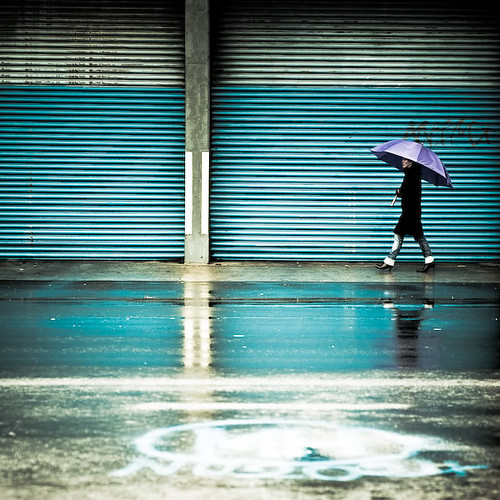
photo source
Winthrop University, Rock Hill, SC, student photographer Chris Osborne hopes his experience in sports photography will take him to the next level - his goal for every shot is "Sports Illustrated Cover".
Osborne explains how a sixth sense is valuable in sports photography, but without the basics of photography, you will still miss the shot.
What first attracted you to photography? How did you get started yourself?
Photography was something I could do since I have always been able to see how I wanted things to look. I have started and restarted a few times. My first camera was a 110 mm back in 3rd grade. I moved onto other interests until college, where I got a Coolpix L3. It is good for general use, but trying to shoot basketball did not work at all. So, I purchased a Rebel XT and have not looked back.
What photographers - well known or unknown - inspire you?
Beyond the sports photography culture, two unknowns got me where I am today. The first is my sister. She says that I stole her interest in photography and will not hold back any criticism of my work. The second is Paul, a fellow photographer at the school paper. After seeing one of his pictures in the paper and not liking it at all, I decided that I could do a better job and filled the other sports photographer position. Only later did I learn that an editor and not Paul made the cropping decisions.
What equipment do you use? Is there a certain piece of gear you could not live without?
I am currently using a Canon Rebel XT with the kit 18-55mm lens, Canon 50mm 1.8, Canon 75-300 4-5.6, and a Tamron 28-200mm 4/5.6. My only other add ons are a Canon battery grip and a polarizing filter. Being on a college student budget, I do not buy new equipment unless I will really use it. But if I had to pick one item that I couldn't live without it would be the battery grip. I missed too many shots by flipping the camera the wrong way to shoot vertically or simply missing the shutter button.
Do you have any goals in mind with your photography?
For my sports shot, there is always one basic thought running through my mind - Sports Illustrated cover. I would love to have one someday. For everything else, I think about if I could see the shot hanging on someone's wall. If I cannot, I find something that fits that requirement.
What do you feel are your strengths and weaknesses in sports photography?
As much as I hate to say this one, one of my strengths is that I have a camera that can handle the speed and lighting at college sporting events. Beyond that, I am able to have a personal relationship with most of the athletes and am able to predict fairly well what is about to happen. My weaknesses are that I am still too slow at times to get the shot that I want, despite knowing almost exactly what is about to happen and that I have a tendency to tilt my camera. Also, where the Winthrop athletic department lets me go during games limits what I am able to shoot.
What does it take to be a quality sports photographer?
To be a quality sports photographer, you have to be a little bit psychic. By that I mean that you need to be able to know where to point the camera to get the shot. Some sports are easier than others. What sports do you like to shoot? I like to shoot basketball and volleyball most. They are high intensity and usually have something new to get every time. I like baseball the least because most of the shots are just excessively similar.
What post-processing tools/software do you use? How much does that influence your photography?
When I want better control over the photograph, I will use Photoshop 7 or Gimp depending on which operating system I am working under (desktop runs XP while laptop is in the process of switching over to Linux). I use Picasa for basic editing such as cropping and overall brightness/contrast. I sacrifice the overall control for speed when I have to turn things in to the school paper.
What advice would you give new photographers?
A) Don't get discouraged. Photography is an art, which means you will have to work at it.
B) A good photographer can overcome bad equipment, and good equipment will not make you a good photographer.
C) Less time editing your photographs means you'll have more time to take more, so get things right in camera as much as possible.
D) Try to see all of what there is to shoot, not just the stereotypical snapshots that everyone else will find.
Check out Osborne's photography at http://sapidexistence.com
Saturday, February 26, 2011
Blair Hill Photography in Salt Lake City, Utah

source,credit
Blair Hill Photography services the Wasatch Valley areas locating between Provo to Logan Utah.
Blair Hill Photography began in the year 2000 when Blair first decided she wanted to use her camera for something other than fun. Though Blair had been taking photographs for a long time, and was very familiar with the SLR camera she owned, she was always just snapping photographs of family & friend adventures, music events, or other various events around the town. She had been published several times in her local newspaper and other various sources, but still never quite thought of the idea to go 'professional.'
When Blair decided that it was time to put her passion to work, she started to attend classes right away on her new favorite subject, so that she could learn as much as she could aside from what she already knew. She attended classes at her local community college, a local arts program, and MICA - Maryland Institute College of Art. She began developing her progressing in the field of musical/industrial photography, and developed a clientel very quickly.
To the downside of all the progress Blair had made with her work, in 2003 she moved 2000 miles across the county, which means her clients were not locals anymore. Discouraged, and looking for a refreshing moment in life, Blair took a break from her passion of photography until 2005. In 2005, Blair realized how much she missed doing what she loved most, taking pictures. She realized how much her focus of photography had changed though, and began to pursue portrait photography.
Since 2005, Blair has been an active portrait photographer in the greater Wasatch Valley in Utah. She has been complemented again and again on her wonderful work, with a repeat clientel that simply keeps growing and growing.
With astonishing photography, incomparable to any of the other local photographers here in Utah, yet still with the most amazingly affordable prices, Blair Hill Photography is completely unique, and perfect. Every day Blair is coming up with new ideas on how to make her work different, better. She is constantly attending trainings and schooling to further her educational background in photography, and to learn anything new she could possibly learn.
Her current creditinals include the following:
Anne Arundel Community College - 2001, Photography Certificate
Maryland Institute College of Art - 2002-2003 Photography Classes
Salt Lake Community College - 2006-current A.A. Photography Classes
In addition to her passion of photography, Blair has a B.S. In sociology from the University of Utah, and is currently working towards her masters in Gerontology. She hopes to one day mix her love for people and culture with her love and passion for photography.
To see Blairs work, please visit Blair Hill Photography by Clicking Here.
Baby Photos and the Art of Photography

source
"Seize the Moment" This is one of my favorite sayings. How often do we take advantage of the MOMENT? The moment is instantaneous. What happens right now will not happen again, ever! Will you remember the moment?
Photography is the art of capturing an image of that moment. It could be a face, a plant or a mountain. It could be something that will be there tomorrow but will look different or it could be something that won't be seen again. I read in a comic book once of a conversation between a father and son. The young son asked his father why old photos were always in black and white and new photos were in color? His father said there was always color film in the old days, but the world was only in black and white then! It was funny but some of our most famous photography "artist" worked in black and white such as Ansel Adams. He and so many others were artists that couldn't make up their work but had to capture it at the right instant of time.
I was going through some photos with my wife the other day. Some of them would take my breath away. They were images captured in time of babies in our family. Some of these babies are now 5, 8, 10, 14, 17 years of age. They are my children, nephews and nieces. Some of them are of my wife and her sisters. They're baby pictures! They are an instant caught in time. They were either taken by my in-laws or given to them as gifts. They may not have been present at the time the photo was taken but they had that image of that instant in time to carry with them until they died. These images were no different than the images that Ansel Adams gave me as a gift when he photographed San Francisco bay where the Golden Gate Bridge is before it was built. He gave me a memory that I could not have had otherwise. My family and my sister-in-laws' families gave my mother -in-law and father-in-law memories that they would never have had if it weren't for photography.
Even if you aren't a great photographer, a picture is still worth a 1,000 words. When a newborn baby comes home from the hospital and the family and extended family come by to see him or her, what comes out? Of course, the cameras come out and start snapping. I learned two schools of thought from photographers that I took courses from. One was in a roll of 36 exposures, 34 better be the top quality photos that you intend to sell. The other photographer taught that in a roll of 36 exposures, expect 2-3 quality photos that are worthy of selling. What I learned from this is spend your time taking posed photos but keep snapping for candid photos.
If you are taking photos of babies or children, take your time for both types of photos. I personally do not like posed photography but that's me. I prefer to capture a child that is at play trying to solve a problem or just being natural. I like the expressions when they are deep in thought or interacting with other children. I found a photo of my son that I took through a car window when he was five holding his hand up with his fingers stretched out. That photo is so memorable to me because I sent it to my mother before she passed away. It was exactly the same photo that my mother took of me when I was five years old.
May I suggest that you seriously consider studying photography to get a better understanding of the capabilities of using a camera properly? If you are just starting out, you need to start with the basics and work from there. Here is a good site to learn various aspects of photography from: http://www.photographytips.com/ For some detailed photography, study someone like Ansel Adams and look at this website: http://www.anseladams.com/